
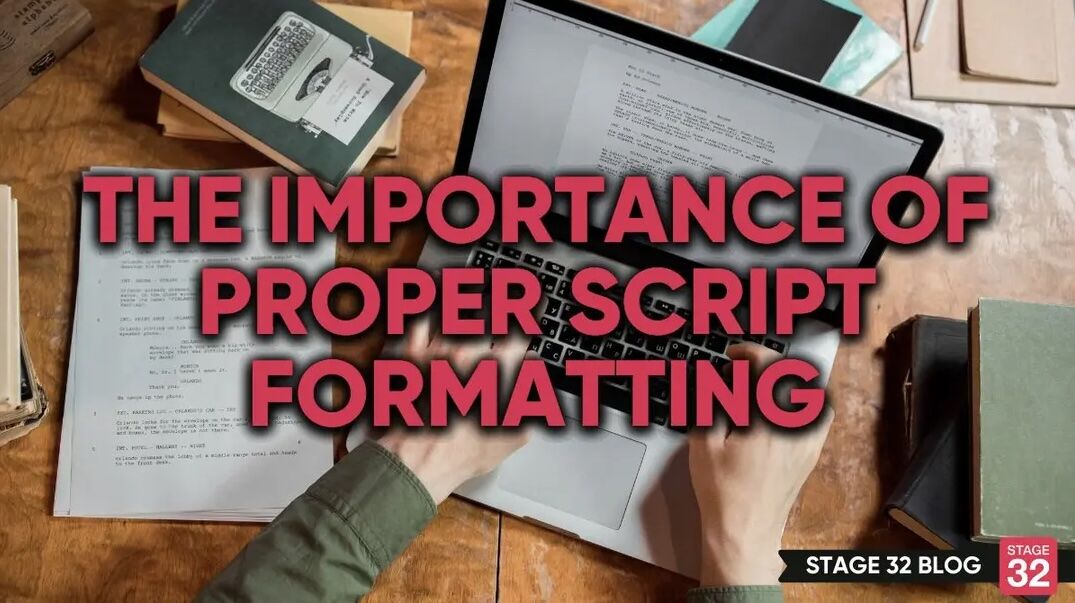
The Importance of Proper Script Formatting

Posted 3 weeks ago by
Stephanie Moore 
We all remember our English teacher in primary, secondary school, and college, spending months teaching us formatting for different types of papers, right? The MLA, Chicago, APA, and other forms of formatting might still haunt our dreams and writing, but they were and are an extremely important written form of communication. This allows people to immediately recognize what they are reading and what type of information is being shared. Scripts have the same need; they need to be formatted properly.
Scripts are the framework! We all know that, as filmmakers, however, if they are not formatted in a standard way, it halts everything beyond that framework phase. If you have chills thinking about it, fear not, formatting help is built into most screenwriting software, such as Final Draft, Celtx, and others. If you know where it is and how it helps development, pre-production, production, and eventually the final product, you can't lose!
Non-formatted scripts are abundant, and they are expected a lot of the time from inexperienced writers. This is why many executives and experienced professionals are wary of accepting material from inexperienced creators. Many screenwriting teachers and mentors will say, Don’t worry about formatting at the start, just get the information out of your head and down on the page. While this is true at the beginning, it causes many problems down the road if it's never given the attention it deserves. The software that was created to assist production professionals in script breakdowns will struggle to perform properly if the script isn't formatted, and it adds a lot of extra time if someone is doing the breakdowns by hand.
Beyond what is automatic in screenwriting software, here is what is needed to format a screenplay properly for a producer and their team to break it down or for you to take the script to the next level in the development process.

Standard Formatting Rules
Margins:
- Top margin of 1 inch
- The left margin is 1.5 inches
- The right margin should be 1 inch
- This should allow for about 55 lines per page
Screenwriting software automatically provides the proper margins for the screenwriter and puts everything into the standard font that is expected for the scripts.
Fonts:
- 12-point Courier font, always
Title Page:
- Title-mid center of the page
- Writer -directly below the title
- Writer contact- Left bottom corner of the page
- WGA registration number- right bottom corner of page
Page Numbers:
- Automatically set for every page in the Header.
- Right top corner of the page ½ inch from the margin, with a period following the number.
- Do not include a page number on the title page.

Scene Headings (aka Sluglines):
- These three elements must be included:
- Where it takes place, meaning Interior or Exterior (INT./EXT.)
- Location- Name it
- Time of Day
Action and Dialogue:
- Action lines include ALL Caps elements such as important props, sounds, and character movements in the scene.
- Dialogue is indented and closer to the middle of the page.
- The left indent is between an inch and one-and-a-half inches from the left margin, and a right indent of about an inch and a half.
- Above the dialogue itself is the character cue.
- This is bolded and is the character’s name with a further indent of an inch.
- If the dialogue is at the end of a page and continues beyond the page break, then you will need to include the word "More" in bold in parentheses and centered.
- Sentences should never be cut off in a properly formatted script. (If you are using screenwriting software such as Final Draft, it will automatically format this part for you).
- Parentheticals go below the character cue and are used to imply emphasis or a note for the character, such as (to themselves), voiceover (v.o), or off-screen (o.s).
Transitions:
- These are used whenever there is a stylistic choice being made and are built into screenwriting software (though they aren’t used in breaking down the script).
Length of Screenplay:
- Features- 80-120 pages
- Shorts - 1-15 pages
- Network Hour - 43-45 pages
- Premium Channel Hour- 55-65 pages
- Streaming Hour- 55-65 pages
- Half Hour Single Camera- 30-35 pages
- Half Hour Multi Camera- 40-45 pages
- Half Hour Animated- 44- 50 pages

Stage 32 Formatting Resources
Stage 32 is filled with formatting-focused education, such as:
- How to Write and Format a Made for TV Screenplay
- Choosing the Right Screenwriting Software For You: Final Draft, WriterDuet, and Fade In
- Common Mistakes Screenwriters Make & How to Avoid Them
- How To Write Descriptions In Your Screenplays For Maximum Effect
- 20 Steps to Planning and Writing a Memorable Scene
- The Art of the Self-Edit - 10 Things You Need to Check in ANY Script Before Sending it Off
There are also great resources and script examples available to Stage 32 Writer's Room members! If you're interested in becoming a Writer's Room member and exploring all of those exclusive perks, you can do so HERE.

There Is Amazing Software Out There For Screenwriters!
When a script is formatted to something like Final Draft or any other screenwriting software, it will automatically pull vital elements into the production breakdown saving the team and possibly even yourself vital time, frustration, and ultimately money as well as respecting the accepted format of the medium in which you are presenting your work.
Softwares that offer breakdowns, budgets, schedules, call sheets, and templates can be found in numerous places across the industry and offer differing services, but the formatting needs for screenplays are the same no matter the platform.
Some software worth exploring:
- Final Draft
- Celtx
- WriterDuet
- Gemini Crown Tech
- StudioBinder
- Movie Magic Scheduling
- Movie Magic Budgeting

How Formatting Affects Production
Screenwriters write to see their words come to life on screen. By formatting properly, you're helping yourself every step of the way from the first time the script is read by an agent, manager, or producer, to allowing for the production team to break it down into the format they need to put all the pieces together. If the script is properly formatted, production breakdowns become much faster, easier, and less expensive to do.
Why should we care? Isn’t it the producer’s job to break down the script anyway?
Well, yes, for budgeting and scheduling purposes, it is both given to the producer/line producer and eventually the 1st Assistant Director. BUT… a non-formatted script is not only hard to read, it isn’t usable for any type of software that assists in breakdowns, budgets, schedules, or call sheets and will give your team nightmares as they reformat the project themselves, slowing everything down before they can even begin their tasks.

Once the screenplay is in the producer/line producer’s hands to be budgeted and broken into the different pieces and departments, a properly formatted screenplay will literally save days of work, which in turn means that those schedules, budgets, materials, departments, etc. can be accounted for and allow the project to move forward efficiently.
Formatting may give you anxiety and headaches, but as any foundation has taught us, it is vital to creating success and saving real nightmares from happening later.
Producers, Line Producers, and Assistant Directors will thank you for formatting properly, and you will thank yourself if you are the jack of all trades who plan to do this kind of development and production yourself!
Let's hear your thoughts in the comments below!
Got an idea for a post? Or have you collaborated with Stage 32 members to create a project? We'd love to hear about it. Email Ashley at blog@stage32.com and let's get your post published!
Please help support your fellow Stage 32ers by sharing this on social. Check out the social media buttons at the top to share on Instagram @stage32 Twitter @stage32 Facebook @stage32 and LinkedIn @stage-32
| Coffee & Content: Opening Doors & Taking Control of Your Creative Path |

| The Stage 32 Community Open House Returns This November — and You’re Invited! |

Search Stage 32 Blog
There are now 4028 blog posts for you to enjoy. Search them all by tags below.
Acting, Advice, Cinematography, Coffee & Content, Composing, Contests, Distribution, Featured, Filmmaking, Financing, Inspirational, Networking, Producing, Screenwriting, Success Stories, Tips, Trending,Relevant Tags
Recommended Articles

Coffee & Content: Why Your Pitch Needs to Be Human

Insider Intel: Packaging your Project- The Chicken or the Egg Dilemma

4 Reasons To Have Audio Description On Your Film

Coffee & Content: Reinvent the Story, Reinvent the Industry
Making Our First No-Budget Feature: The Pure Vortex Production Chaos (Part 2)

What Stage 32's Community Is Really About (Beyond Scripts, Sets, and Showreels)

Insider Intel: The $10-15M Sweet Spot Hollywood's Chasing Now

Don't Let the Momentum of November Write Club Die: How to Stay Active Into 2026 & Beyond!
How Stage 32 Script Services Make You A Better Writer

Stage 32 + AFM 2025 Education Partnership - Join RB & Celebrate 10 Years!
 Register / Log In
