TV & Film Legal Clearances: Everything You Need To Know To Safeguard Your Project

Hosted by James Pacitti
$49
On Demand Webinar - Available for immediate viewing and unlimited access.
Start Learning

Hosted by James Pacitti
$49
On Demand Webinar - Available for immediate viewing and unlimited access.
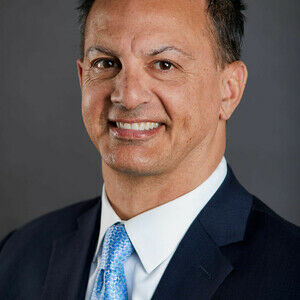
Webinar hosted by: James Pacitti
Managing Attorney at Pacitti Law Firm (PLF)
James Pacitti has been an attorney for nearly three decades and is licensed to practice in California, Florida, New York, and Pennsylvania. He is the founder and managing attorney of PLF, an entertainment law firm based in Beverly Hills, California. Prior to starting PLF, James was a trial attorney and litigator in state and federal courts across the country. PLF represents a broad spectrum of creatives, including producers and production companies, in the development, finance, production, and distribution of their projects. The firm also acts as general counsel to its clients and advises them on a wide array of entertainment matters and intellectual property rights issues. PLF has handled TV and film productions across the United States and the globe, including the United Kingdom, Europe, Asia, Africa, South America, the Middle East, and Australia. Past and current clients include Academy Award and Emmy-winning producers and production companies. Full Bio »
Webinar Summary

Learn all about legal clearances and how you can protect the rights to your project with esteemed entertainment attorney James Pacitti of Pacitti Law Firm
PLUS! You'll receive a Mock Script and Film Clearance Report as well as examples of clearance issues that led to court cases!
Producing a TV, film, or multimedia project is an incredibly daunting task wrought with potential legal peril throughout the entire process.
A TV, film, or multimedia project is the amalgamation of a vast array of rights. In order for producers to be able to distribute their projects, it is essential that the necessary rights are secured through expertly prepared and vetted agreements with each rights holder. It is also vital that producers do not infringe on the rights of those only incidentally involved in the production of their project, including copyright and trademark rights holders. In addition, producers must be mindful of issues of defamation, invasion of privacy, and rights of publicity. Successfully navigating through this complicated legal landscape is virtually impossible without the knowledge and assistance of an experienced entertainment attorney. We’re here to help.
In this essential Stage 32 webinar, you will learn the major legal issues that are most likely to arise during your production and how you can steer clear of any potential legal pitfalls so you can successfully produce and distribute your project. Teaching you everything you need to know about clearance issues for your project is esteemed entertainment attorney James Pacitti of Pacitti Law Firm. James has been an attorney for nearly three decades and is licensed to practice in California, Florida, New York, and Pennsylvania. He is the founder and managing attorney of Pacitti Law Firm (PLF), an entertainment law firm based in Beverly Hills, California. PLF represents a broad spectrum of creatives, including producers and production companies, in the development, finance, production, and distribution of their projects. The firm also acts as general counsel to its clients and advises them on a wide array of entertainment matters and intellectual property rights issues. PLF has handled TV and film productions across the United States and the globe, including the United Kingdom, Europe, Asia, Africa, South America, the Middle East, and Australia.
In this information-packed webinar, James will guide you through the clearance process and illustrate why an entertainment attorney is an essential member of your producing team. You will learn everything from how to obtain permission to use work from a third party, how to navigate clearance of using underlying intellectual property (IP), how to copyright of your work and how and why you need to get clearance of your film after production and post-production.
PLUS! You’ll receive exclusive handouts to help you ensure clearance needs on your project are met. Downloads include:
- Mock script and film clearance reports
- Examples of clearance issues that led to court cases
If you are a filmmaker at any stage of your project, you do NOT want to miss this webinar with immensely important information to make sure the production and release of your project goes smoothly.
“Securing and clearing all the necessary rights is essential to all productions. However, proper clearance is often misunderstood by independent film and TV producers. I am looking forward to the opportunity to give guidance on common clearance issues and to convey the importance of involving legal counsel at the inception of the development of a project.” - James Pacitti

What You'll Learn
- What Is Clearance?
- Obtaining permission to use works owned by third parties
- Avoiding copyright or trademark infringements
- Content creation during production: Capturing rights through work-for-hire agreements
- Acquisition of the Underlying IP or Script
- Option/purchase of underlying intellectual property
- Option/purchase of screenplay or work-for-hire
- An entertainment attorney can ensure the necessary documents are properly prepared.
- Copyright & Title Searches/Reports
- Copyright reports can determine if the underlying literary material or script is available to exploit
- Title reports will identify any prior uses to determine if the title is clear to use
- An entertainment attorney can either conduct the review or review a third-party report and advise producers on how to proceed
- Script Clearance Report
- The attorney reviews the script and provides a script clearance report that breaks down the script to identify any potential legal issues.
- Intellectual property infringements based on copyright or trademark.
- Other issues, such as defamation or invasion of privacy
- Film Clearance
- After production and post-production are completed, prior to picture lock, an attorney should review the film
- The attorney will compare the contents of the film to make sure all of the necessary agreements have been obtained and properly prepared
- Film clearance will also confirm that the instructions and prohibitions in the script clearance report were followed
- Common pitfall: Inadvertent IP infringements (e.g., artwork, photos, tattoos, etc.)
- Based on the film clearance report, the producers and their entertainment attorney can address any outstanding clearance issues before locking picture
- Practical vs. Legal Issues
- Including trademark or copyright-protected material is not always purely a legal analysis
- Risks of litigation of other, different issues is also a consideration
- Consequences of Improper Clearance
- Inability to secure errors & omissions insurance
- Inability to distribute the project
- Loss of your money or investors’ money
- Lawsuits.
- Q&A with James
About Your Instructor

James Pacitti
FAQs
Q: How do I watch my webinar live?
A: If you received a confirmation that your webinar is on Go to Webinar, you will receive an email from Go to Webinar with further instructions for participating in the live webinar. You can also access your webinar link in your purchase history located under settings in the top right-hand corner of your Stage 32 profile.
If you received a confirmation that your webinar is on Zoom, you will receive a separate email from Zoom with further instructions for participating in the live webinar. Your login link will not be in your Stage 32 profile. If you did not receive your link via Zoom please email support@stage32.com.
Q: How do I watch my webinar on demand?
A: You will be able to watch your webinar on demand as many times as you’d like inside your Stage 32 profile. The recording is processed and posted between 24-48 hours after the webinar concludes. You can follow the instructions below.
YOU MUST HAVE A STAGE 32 PROFILE TO WATCH YOUR VIDEO – STAGE 32 IS FREE TO JOIN
If You Already Have a Stage 32 Profile:
- Log into your Stage 32 profile
- Click "Settings" in the top right-hand corner (gear icon)
- Click "Purchase History"
- Choose this webinar and click the link to view
- Go to www.stage32.com
- Create a profile using the SAME email address you used to sign up for this webinar. The email addresses must match in order to watch the webinar.
- Once you have your profile set up, you can view the webinar by clicking "Settings" in the top right hand corner (gear icon)
- Click "Purchase History"
- Choose this webinar and click the link to view
Q: What is the format of a webinar?
A: Stage 32 Next Level Webinars are typically 90-minute educational broadcasts that take place online using a designated software program from Stage 32. Your webinar will be taught by a working industry professional with in-depth teaching on a topic. If you are able to attend live you will be able to ask your Stage 32 Educator questions during Q&A.
Q: What are the system requirements to watch my webinar live?
A: You will need to meet the following system requirements in order to run the webinar software: Windows 7 or later Mac OS X 10.9 (Mavericks) or later.
If you have Windows XP, Windows Vista and Mac OS X 10.9 (Mountain Lion): The webinar software does not support these operating systems. If you are running one of those operating systems, please upgrade now in order to be able to view a live webinar. Upgrade your Windows computer / Upgrade your Mac computer.
Q: What if I cannot attend the live webinar?
A: If you cannot attend a live webinar or purchase an on demand webinar, you will have access to the entire recorded broadcast, including the Q&A.
Q: Will I have access to the webinar afterward to re-watch?
A: Yes! Like all Stage 32 education, after the purchase of a live or on demand webinar, you will have on-demand access to the recording.
Q: How do I get a copy of the handouts provided?
A: If the webinar you take included handouts you can find them as downloads underneath your on demand video. You must be logged into your Stage 32 profile to view the video and get the handouts by clicking settings in the top right hand corner, then clicking purchase history.
Q: What if I need accessibility and accommodations?
A: Email support@stage32.com to request accommodations.
Thanks for your loyalty to Stage 32 Education. We value having you in the Stage 32 community.
If you have any further questions, we are always happy to help. Please contact Stage 32 support at support@stage32.com.
Relevant Tags
Share with friends:
Questions?
Other education that may be of interest to you:

How to Edit Your Film or TV Footage to Make a Trailer that Pops
Learn directly from an editor who works with Netflix, Max, Warner Bros. and more! Putting together a great trailer for your own film or series can make all the difference when it comes to building an audience, getting eyes on your film, or even convincing distributors, executives and more to be interested. And editing trailers seems easy enough. It’s just the coolest bits of the movie with some awesome music behind it, right? Then why is it that when you try this yourself, the trailer just feels flat, no matter how good the track is? Why is it so difficult to make your project look engaging in a trailer when you’ve done the elevator pitch for this story more times than you care to count? Why is it that you were able to edit a whole long-form movie together, but this 2-minute trailer is giving you so much trouble? The truth is: a successful trailer is so much more than your best shots with your best music behind them. There’s a reason that there are entire agencies dedicated to just trailers and promos along with a whole roster of “trailer editors” who specialize in this medium. Trailer editing is really its own unique art form with its own rules and its own skillsets required to make it work. This doesn’t mean you can’t make an effective trailer of your own film, but you’re first going to need to learn how to navigate this medium and approach your film with new eyes to make the trailer sing and get your project the attention you’re looking for. Stephen Boyer is a film and video editor with nearly 10 years of experience in post-production and currently serves as a trailer editor for HBO Max, where he recuts modern trailers for existing films in the platform’s catalogue. Through his career, Stephen has edited feature films, documentaries, commercials, music videos and nearly everything in between and has cut for a litany of influential brands such as Netflix, Microsoft, SiriusXM, Nintendo, Blizzard Entertainment, and Warner Bros. A Los Angeles native with a lifelong passion for filmmaking and music composition, Stephen is well-versed and passionate in the art of trailer cutting and is bringing his years of experience exclusively to the Stage 32 community. Stephen is going to break down what makes an effective trailer today and the steps you should take to create a great trailer for your own film or television project. He’ll first discuss what good trailers look like in general and will then delve into how to re-approach your film with new eyes to begin building your trailer and find the right clips to include. He’ll also go over how you can identify the right pieces of music for your trailer and will teach you how to build out the trailer’s story. Stephen will go over polishing the trailer with sound design and will explain the fine tuning and rewrite process necessary for any trailer. Stephen will identify some of the most common pitfalls trailer editors should avoid and will even share a case study of a real trailer he edited for HBO Max of a notable film and explain how it came together. Through Stephen’s lessons and case study, you’ll gain a series of new strategies and techniques to tackle your own project’s trailer with confidence and create something that will stand out from the crowd.

How to Find, Approach & Close Investors For Your Film
One of the biggest challenges you’ll face as a creative is finding financiers and raising funds for your film. You may have a great script, a great cast and crew, but at the end of the day no money means no project. It seems like everywhere you turn these days there are thousands of films getting made, so where are all these filmmakers finding their financing? And what makes these projects so special and attractive that financiers are ready, willing and able to write a big check? The answers are simpler than you think. The key that separates a successful producer, filmmaker, director or actor or screenwriter looking to control their own content from those still struggling is the ability to raise and close the money necessary to make the project a reality. For many, the belief is that a great script is all you need to attract investors. Although story is still king, it's not the only factor that goes into a financier separating your project from all others that are presented to him or her. To set yourself up requires work, research, and a targeted plan of attack. It requires a full understanding of the financial prospects of your project, the marketplace, and potential distribution and recoupment strategies. And most of all, and this may surprise some people, it requires you to be personable, collaborative, and to have an ability to listen and adjust where necessary. Tom Malloy has raised over $25M in funding for films. He co-owns the distribution/foreign sales company Glass House Distribution, and two production companies - Trick Candle Productions and Blood House Productions. Over the years Tom has produced almost two dozen feature films and has worked with Dakota and Elle Fanning, Elisabeth Moss, Amy Smart, Billy Zane, Eliza Dushku and many more. Throughout all these projects he's mastered the art of raising capital to greenlight a project. And, he's going to share with you how you can find money for your own project! In this exclusive Stage 32 on-demand webinar, Tom focuses in on how to identify, attract and sell investors who are a fit for your project. He'll introduce the HNI (High Net Worth Individual) and how you can find and approach them. You will learn how to tailor and perfect your financing pitch so that it's personal, professional and stands out from the pack, and learn to be prepared for any responses, feedback, or kickback you might receive. As important, you'll learn the three mistakes commonly made when approaching and pitching an investor. Tom will show you how to research investors, and give you an actual list-making technique that works. Then, once you have your plan, he'll teach you how to get and win meetings. He'll teach you which markets are worth attending and how to put a plan of attack in place once you get there. Finally, Tom will teach you 5 tips on how to close your investor. This is proven advice from someone who has a track record of over a decade being successful and finding financing. Praise For Tom's Teaching "Solid gold Tom! Thanks for all the handy tips to put into place. You made the process seem so much easier to find people to actually invest in my film!" -- Steven R. "I have a tremendous amount of confidence in the projects I put in front of investors. What I've learned is I don't have the right strategy or message to make them understand why I have such confidence. This webinar changed all that for me. I realize now that I had much of it backwards and was missing many key components that made my pitch, and frankly, my follow up methods lacking. I'm grateful." David W.

How to Pursue a Career in Acting in America as an Immigrant with Bambadjan Bamba
Free webcast exclusively for Stage 32 members with Ivory Coast/American actor Bambadjan Bamba (BLACK PANTHER, SUICIDE SQUAD, THE GOOD PLACE) - bring your questions! No matter who you are or where you’re from, the journey to becoming a full-time and successful actor in America is a difficult one. Yet if you’re from a different country and are contemplating moving to America, or if you’ve already moved here and are dealing with one of a variety of immigration statuses, your path is that much harder. You have to figure out how to legally live in America with this profession and work with studios and networks when payment might be more complicated than for actors that are American citizens. And that’s on top of the everyday struggle of finding and landing roles, which can also be harder if you do not have an American accent. There is no question that there are serious obstacles to overcome as an immigrant actor, but it’s still a path that can be achieved, and has been achieved many times before. For as much emphasis that is often put on the sheer luck of breaking through as an actor and finding success, there is another element that is often underemphasized, which is the strategy and planning necessary for actors to build their career. Luck certainly can play a part, but these lucky breaks are much more likely to come to actors who do the work ahead of time to have a game plan and can better put themselves in the right place and the right time Whether fair or not, this goes double for immigrant actors and actors planning on moving to America. There is a large amount of strategy and planning necessary to find success, including how to get a visa, find sponsorship, get representation, use support networks and initiatives available to you and building your career piece by piece. It can be overwhelming, but the good news is you never have to be alone in this journey. There are communities and organizations that offer support as well as fellow immigrant actors who have gone down the path you’re on and can give you tips and strategies to help you achieve your dreams. Bambadjan Bamba is an award-winning actor, filmmaker, and activist from the Ivory Coast who has worked in prominent roles on numerous hit television shows like THE GOOD PLACE and GREY’S ANATOMY, and in blockbuster films like BLACK PANTHER and SUICIDE SQUAD. He was recently featured in Will Smith’s Netflix series AMEND: THE FIGHT FOR AMERICA. His writing has been published in Variety, the Washington Post, NBC, and CNN to name a few, and he is a contributor in the New York Times bestseller "American Like Me: Reflections on Life Between Cultures" by award winning actress America Ferrera. In 2017 Bambadjan publicly disclosed that he was a recipient of the federal Deferred Action for Childhood Arrivals program (DACA) that is in danger of being terminated. Ever since, Bambadjan has used his inspirational story to advocate for immigrant rights. Bambadjan is also the recipient of the Courageous Advocate Award from the ACLU and the Courageous Luminary award from the National Immigration Law Center. In this free Stage 32 webcast, Bambadjan will give you some insight of how to strategically prepare for your move, maneuver around common obstacles that international actors face, and find your community and representation to give yourself the best shot to be successful. He’ll first explain the pros and cons of moving to America to pursue acting as well as when the right time to move is. He’ll then go through the legal roads you can pursue and how to navigate different immigration statuses you may have. Bambadjan will lay out different organizations and initiatives that you can take advantage of as you get started and will give you advice on how to find representation and sponsors from abroad and how to work legally as an undocumented immigrant. He will also lay out how to work even if you do not have an American accent, as well as how to work on improving your American accent. Finally, Bambadjan will give you tips and strategies on dealing with the emotional challenges associated with being an immigrant. In partnership with The Lee Strasberg Theatre & Film Institute
Navigating Legal Contracts Post-Pandemic: 5 Important “Boiler Plate” Provisions that Now Matter in Film, TV and New Media Projects
A hot topic of conversation in our current COVID-19 world is how film, television and new media productions will resume production safely and effectively. The entire entertainment legal landscape has changed as a result of the world’s pandemic. Producers, filmmakers, directors and crew need to think about protection before you can ever step on set to say “action.” It’s important to take a deeper look at the legal agreements that tie parties together on a project as we contemplate the future. Contract provisions that parties wrote off as “boring” or “boiler plate” will significantly change moving forward. It’s important you understand how this affects your project. You don’t want to get stuck with a production or financial nightmare if you’re not protected legally to move forward on your film, TV or new media project. There are five basic provisions in a legal contract that many dismissed as “boring boiler plate” that now will have significance moving forward. It’s important that you know the basic purpose of these provisions, why they are drafted and what purpose they serve for all parties. With each provision, you will need to know the impact and implications as it relates to COVID-19 and how these provisions will continue to change to comply with government and guilds, insurance coverage and mitigation of risk for both parties. You need to make sure to contemplate unlikely scenarios so that contracts are comprehensive to whatever may occur. Elsa Ramo is one of the top entertainment attorneys in the industry today and the managing partner of Ramo Law. Recently named to Variety’s 2019 “Dealmakers List,” Elsa Ramo has represented over 100 films and 50 television scripted and unscripted series in 2019 alone, including Emmy award-winning shows and films which debuted at the 2020 Sundance Film Festival.Her clients include Imagine Entertainment, FOX, Balboa Productions (Sylvester Stallone’s production company), Scout Productions (creators and EPs of QUEER EYE), Boardwalk Pictures (EPs for CHEF’S TABLE) and Skydance. Elsa has her finger on the pulse of the legal side of the entertainment law and works non-stop to protect her clients in all deals. Elsa will go through the nuts and bolts of contractual provisions in the entertainment industry and a walk through of how these should and will change due to the COVID-19 pandemic. Elsa will start by offering a basic understanding of five contractual provisions that are now much more important in the wake of the pandemic: Force majeure, suspension/termination provisions, assumption of risk and related indemnification provisions, medical releases and disclosures, and scheduling and payment provisions. She’ll discuss why they are drafted and what purpose they serve among the parties. Then, with each provision, she will discuss the impact and implications as it relates to Covid-19 and how these provisions are and will continue to change to comply with government compliance, guild compliance insurance coverage and mitigation of risk for both parties as they contract during a pandemic. Elsa will distill what we can learn from changing these ‘boring provisions’ that we can apply to better prepare ourselves for future unlikely scenarios and ensure contracts are comprehensive to whatever may occur. Finally, Elsa will teach you how to flag and ensure that the modifications placed on these contracts comply with government legislation, union compliance, and other worst-case scenarios.You will be fully prepared to understand how “boring boiler plate” provisions can affect your project and how to best protect yourself. Praise for Elsa’s Stage 32 Webinar: "This was one of the best webinars I have taken so far. Thank you again. I look forward to the next one!" -Romina S. "Awesome presentation - great speaker, made complicated issues much clearer, lots of great info! Great info for anyone in the industry in all positions. Thanks!!" -Ron H. "This webinar was absolutely brilliant! Elsa is clearly a pro, but her manner was so calm and approachable. She didn't talk down to us and explained all these intricacies so that I believe everyone was able to understand them. Bravo! More Elsa Please!" -Becca G. "Elsa is always amazing and legal is always a fantastic topic, now more than ever!" -Lisa G.

Advanced Directing Class: How to Plan and Execute Your Shoot
Advanced and in-depth 2-part directing class with award-winning Sundance and SXSW and director Clay Liford Learn how to handle shot coverage, scheduling, and time management on set! Perhaps the biggest challenge for any director, new or experienced, big budget or small, film or TV, is making your day, and ensuring you are efficiently getting the footage and performances you need so you don't go over schedule and over budget. This is difficult, but there’s a proven method to keep you on track, while still allowing for inspiration and experimentation on set. It also happens to be the industry standard, and applies to any level of filmmaking - from student short to studio feature. It comes down to identifying what to plan and what to improvise. The truth is the more you plan, the more you’re free to experiment while filming - provided you optimize your time and focus on the right elements. Let's go deep into how exactly to plan your day so you can do your job on set, stay in control, stay creative, and leave with the best possible film you can make. Clay Liford is an award winning independent filmmaker and director of photography whose projects have premiered at Sundance Film Festival, SXSW, Munich, AFI Film Fest and more. As a director of photography, Clay has shot over twenty-five features, including the SXSW award-winning films ST. NICK and GAYBY. His film credits also include WUSS, EARTHLING, SLASH, and MY MOM SMOKES WEED, a Sundance Film Festival favorite. As an indie filmmaker, editor, and writer, Clay has mastered the art of pre-production and production so that his projects move like clockwork. And as a film production instructor at the University of Texas, Clay has become proficient at teaching his methods for efficiency and artistic self-sufficiency. Now he’s sharing what he knows with the Stage 32 community. In this intensive on-demand 2-part class, Clay will show you how you can save time and money as a filmmaker by employing strategies and practices to make your day and keep your project moving. Focusing on both pre-production and production, Clay will walk you through how exactly to plan your days on set, address where to place emphasis in your pre-production process, and lay out a specific method for planning shots and scenes, which includes shot lists and top-down lighting plots. Along the way, Clay will provide invaluable handouts and case studies. Praise for Clay's Previous Stage 32 Education: "Excellent - granular and practical, not just theoretical." --Peter C. "Clay was amazing. Would love to take more classes from him" --Jacqueline A. "I was impressed with Clay. He has what feels like a natural gift for teaching from a comfortable and personal level" --Maeve T.

Understand Global Filmmaking: Hollywood & The Foreign Markets
Learn directly from Alex Franklin, Veteran Studio Executive for New Line Cinema, Dimension Films, Lionsgate Films and Artisan Entertainment! In this Stage 32 Next Level Webinar, host Alex Franklin will discuss the globalization of Hollywood and what filmmakers need to know about important countries and markets around the world to stay ahead of the game. You will learn which markets are becoming the top foreign markets (including China, Russia, India, Brazil and more), important statistics and international comparisons, how foreign audiences, industries, and governments are changing the Hollywood system, and what all of this means for your career. You will learn how globalization is changing the distribution, marketing, production and development processes, and you will leave with a clear understanding of how industry-wide changes resulting from globalization are impacting the job market for writers, producers and directors in the U.S. The growth of international markets continues to impact studio filmmaking decisions, and foreign markets like China dominate the entertainment news. Therefore it is critical that the next generation of Hollywood producers and filmmakers understand the ways in which globalization is reshaping the industry. Your host Alex Franklin is a veteran of the Hollywood studio system, having worked in development and production at New Line Cinema, Dimension Films, Lionsgate Films and Artisan Entertainment. As a Studio Executive, he was involved in the development and production of films including Halloween (directed by Rob Zombie), Saw, Saw 2, The Punisher, 1408 and Youth in Revolt. After leaving the world of studio development, Franklin co-founded Pangea Pictures, a visual effects company which was involved in the postproduction of films including A Perfect Getaway, Brothers and The Warrior's Way. Currently, Franklin is head of film and television at Partos Company, where he specializes in working with A-List cinematographers, production designers and costume designers.
 Register / Log In
