THE STAGE 32 LOGLINES
Post your loglines. Get and give feedback.

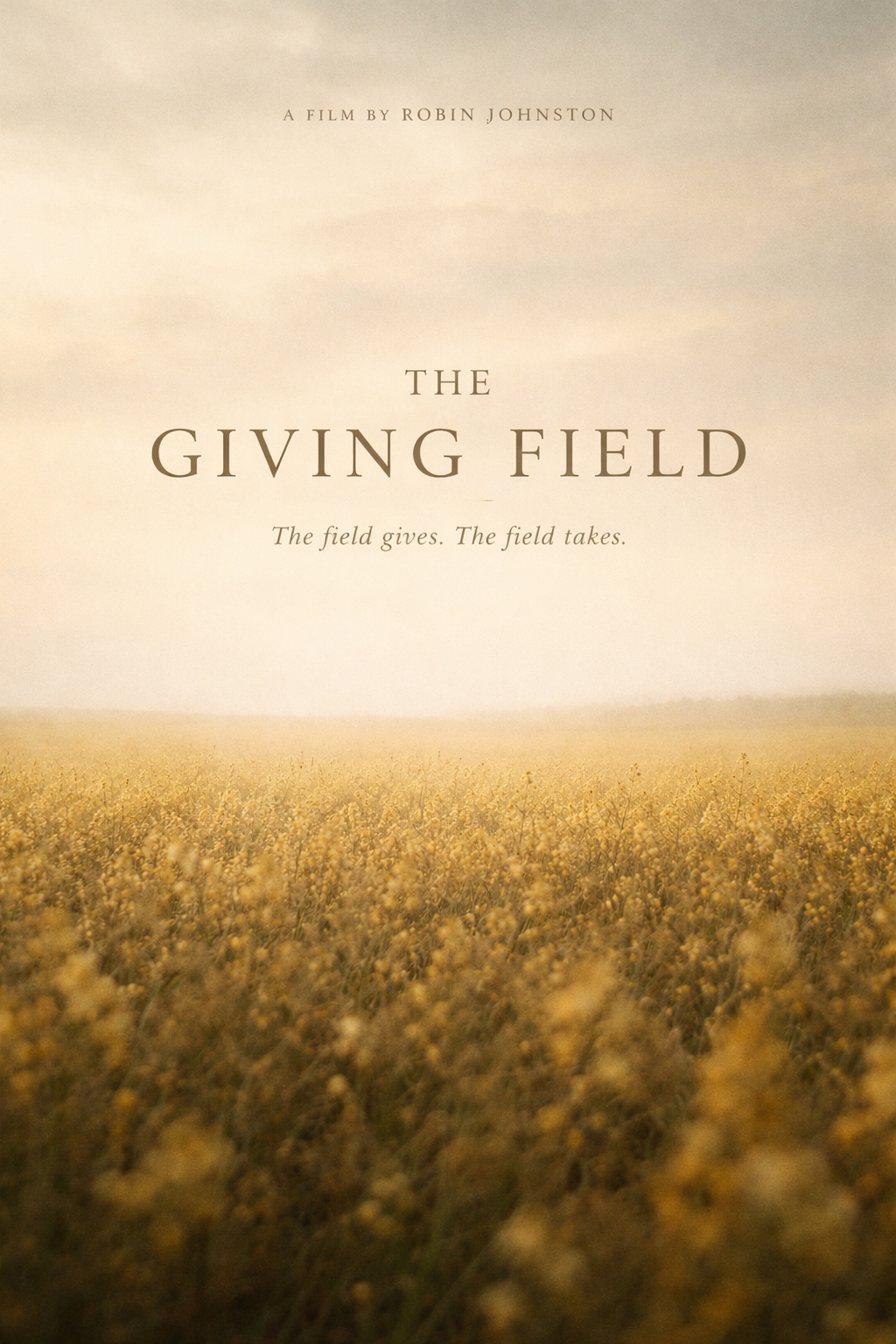
THE GIVING FIELD
By Robin Johnston
When their young son vanishes into the fields of their farm a devout couple’s faith begins to fracture when the mother continuously sees her son standing waving on the horizon, just beyond her reach.
SYNOPSIS:
Set within an isolated agrarian sect devoted to purity, silence, and devotion to the land, The Giving Field follows Sister Sarah and Young John, a farming couple whose lives are shaped by ritual, faith, and a strict moral code.
One summer, their infant son Samuel disappears into the endless yellow oilseed rape fields that surround their humble home. The sect's elders insist that “the field gives and the field takes,” and the family is expected to endure without question. But Sarah cannot. Through the heat haze of the rippling crops, she begins to see her son, a shimmering figure always just beyond reach. Her grief becomes obsession, driving her to the edge of both the fields and her own sanity.
John struggles to comfort her while preserving the community’s expectations. When he, too, glimpses the boy, he keeps silent, caught between the reality of what he has seen and the shame of defying the sect. As days pass, Sarah also vanishes into the field, leaving only her bonnet behind.
When the police arrive to investigate, John explains that his wife’s grief drove her away, but he says nothing of the visions that haunt him.
As the officers leave, a young constable glimpses a small figure at the field’s edge, questioning the boundary between faith and perception. John now remains alone, shunned and isolated, while the field continues its eternal hum.
He is ever haunted by the sight of his wife and son at the edge of the golden fields, waving.
Told with sparse dialogue, luminous natural light, and long, meditative takes, The Giving Field is a quiet folk horror about grief, faith, and the invisible forces of the land — where love and devotion are inseparable from loss.
 Register / Log In
