
A Filmmaker’s Guide to Screen Tourism: Part 1

Posted 3 years ago by
David Zannoni 
Since my appointment as delegate of the Mexican National Chamber of the Film Industry (CANACINE) for the State of Quintana Roo, also known as the Mexican Caribbean, I have become familiar with the phenomenon screen tourism.
In fact, screen tourism is becoming one of the key elements in policy making for the audiovisual industry in Quintana Roo, which includes what nowadays can be considered Mexico’s most important beach tourist areas.
In this article I will explain what screen tourism is, how it works and why this phenomenon has become popular in recent years. I will mention examples from several countries and discuss the requirements for and the benefits of successful screen tourism.
Finally, I will highlight the benefits of screen tourism for filmmakers.

What is screen tourism?
In an article from July 2019, Robert Peaslee describes screen or film tourism as “watching a show or movie and then planning to visit the place or places where it was filmed”.
In basic terms, one can say that screen tourism is the phenomenon that people decide to go on vacation or otherwise travel to a location based on what they have seen in a film or a series.
The fact that “locations that appear in films or series can arouse the interest of viewers and motivate them to travel to that destination, becoming tourists”, can trigger a world of opportunities for the audiovisual sector, tourism, governments, and private initiative.
In essence, how screen tourism works is that “a location becomes popular with visitors because it has appeared in a film or television series. As tourists enjoy visiting places they see on screen, fans want to visit specific landmarks, places, and buildings from scenes in their favourite TV shows and films. TV shows and films can as a result raise the profile of the city or country where the story is set”.
In addition to this explanation in this article from Invest Northern Ireland, I would argue, the benefits extend beyond the city or the country, and can include a specific region, and even a hotel or hotel chain, a resort, a theme park, a castle, or any other public or privately owned and managed location that attracts tourist.

Examples of screen tourism showing the impact on the tourist sector
Although it seems that only recently the phenomenon of screen tourism is being recognized as such, it is far from new.
Let’s look at the film “Braveheart”, which dates back to the year 1995. As per this article from the BBC from 2015, it is estimated that the “Wallace Monument in Scotland went from recording 80,000 visitors per year to 180,000 after the release of the film. Twenty years later, in 2015, 35% of visitors said they had visited the monument influenced by the film. As can be seen, the influx of tourists to these sites endures over time”.
To show the potential of screen tourism, as per Creative England’s webpage Filming In England, almost “a third of potential visitors to the United Kingdom are keen to visit places seen-on-screen”.
In 2015, Olsberg SPI produced a report, called “Quantifying Film and Television Tourism in England for Creative England and in association with VisitEngland”. The report shows impressive numbers with respect to “the impact of screen tourism across England outside of London”:
- Screen tourists brought between £100 million-£140 million to the economy in 2014;
- The most popular locations can attract up to £1.6 million every year from international tourists;
- Alnwick Castle (famously the home of Hogwarts for the first two Harry Potter films) generated £4.3 million in screen tourism spend in 2014;
- Other sites attracting significant levels of screen tourism included Bampton, with £2.7 million estimated, and West Bay (Broadchurch).
“Eight locations were carefully chosen to represent a cross-section of sites, spanning different areas of England, different types of location and different types of screen production. Screen tourists were detected at all of the eight sites surveyed for this project. While the volume varied significantly, the value at some sites was highly significant”.
Another popular international filming destination is New Zealand. Amongst others, “The Lord of the Rings” and “The Hobbit” film series were filmed in New Zealand. The country saw an increase of 50 per cent (!) in visitors after filming. This shows the huge economic impact that screen tourism can have on the tourist industry. In the case of New Zealand, screen tourism and its long-term impact bring millions of dollars to New Zealand’s economy every year.

A series showing a “pan-European” impact of screen tourism, is “Game of Thrones”, which run from 2011 to 2019. The filming locations are spread over several European countries like Croatia, Iceland, Ireland, and Spain. In this article of May 20, 2019, from advertising platform Criteo, it is mentioned that there was a “significant increase in bookings to these countries a few months before the premiere of the last season in 2019. Bookings to Iceland increased by 166% and those to Croatia by 68%”. The locations in Spain included the Real Alcázar in Seville and the Zafra Castle in Guadalajara”. “According to the tourism platform Tripadvisor, searches for the Zafra Castle on this portal increased by 488% in one year after its appearance in the series”.
In Spain, the concept of screen tourism has received a boost since the pandemic. According to the travel intelligence platform, Travellyze, 12% of Spanish tourists are inspired by films when they travel. Furthermore, the Spain Film Commission launched in the International Tourism Trade Fair (Fitur) 2021 the project “Spain Screen Grand Tour”. Its objective is to promote the creation of tourism products based on films or tv shows and to standardise film tours on a national level.
In Italy, several regions are actively promoting screen tourism. The Official Emilia Romagna’s Tourism Blog mentions some of the best Italian filmmakers who “started right in this magical land”, and mentioned are the cities of Ravenna shown through the film “Red Desert”, Ferrara as depicted in “The Gardens of the Finzi-Continis”, Pupi Avati telling about Bologna in many of his films, Rimini imagined by Federico Fellini or Parma in “Segreti Segreti” by Bernardo Bertolucci.
The website of the Sardinia Film Festival mentions some notable places, “like Procida and Salina where “Il Postino” took place, Matera where Mel Gibson directed “The Passion” on 2002 or also Porto Empedocle (Agrigento), where “Commissario Montalbano” scenes where shot”.
Live In Italy Magazine refers to the potential of screen tourism in the historical region of Tuscia, nowadays comprising Tuscany, a great part of Umbria and the northern parts of Lazio. Of particular interest is the majestic Palazzo Farnese in Capranica, where the Italian-American director Francis Ford Coppola decided to “shoot the opening scene of the film “The Godfather III” (1990)”.
Recently, in Mexico, the Mexican Chamber of the Film Industry – CANACINE – launched its delegation for Quintana Roo under the slogan of “screen tourism”. I am privileged to be heading this delegation. Expectations are high for Mexico’s Caribbean State, which is a tourism hot spot that includes within its borders famous tourist destinations like Cancun, Playa Del Carmen and Tulum, which are some of the most visited beach destinations in the world. As the State continues to grow rapidly, and attracts not only visitors, but new residents from all parts of Mexico and from abroad, a strong audiovisual industry can offer jobs and contribute to economic growth and diversification.
Film & TV productions will benefit from the infrastructure than the tourist sector offers, and on their turn, productions will promote tourist locations. Also, Quintana Roo’s unique blend of cosmopolitan, urban, and indigenous cultures is attractive for filmmakers from in and outside Mexico.

Factors that favor screen tourism
Now that we have seen some examples and numbers showing the impact of screen tourism, let’s focus on why this phenomenon is so much on the radar recently.
In my view, there are three main factors at work simultaneously that explain this.
“Globalization of localized content”
First, we are living in times characterized by globalization of content. It seems that everyone has at any time access to information and content, not only from the place where he or she lives, but from all over the world. As for content consumption, which includes the availability to watch films and series, content is now more than ever available to a global audience.
Ironically, successful globalization is going hand in hand with an opposite development, namely localization of content. Localization of content means that content is adapted to local languages, and that information and graphics are adapted as well to fit local standards and requirements. However, the message that is transmitted, is universal and cuts across cultural boundaries.
So, I would argue that we are witnessing “the globalization of localized content”.

The rise of the streamers
Another key factor is what one can call the rise of the streamers. Netflix, Amazon, Apple, Disney, HBO, and other international and local platforms that have started to dominate the production, distribution, and content consumption landscape.
The streamers are producing international content at location. The consumption of films and, above all, series is ever increasing, and streaming platforms have made it possible to consume audio-visual content from all over the world.
In September 2021, Netflix and the World Tourist Organization (UNWTO) produced a search called Cultural Affinity and Screen Tourism – The Case of Internet Entertainment Services. This survey amongst others “sheds light on how best to maximize the social, economic and cultural benefits of screen tourism and offers both policymakers and the private sector recommendations on how to leverage internet entertainment services to promote unique and shared culture and traditions”.
The impact of the COVID19 pandemic
The third factor is the most recent one: the COVID19 pandemic. The pandemic, especially during the epicenter of the health crisis between the beginning of 2020 and end of 2021, kept us all at home, homeworking and homeschooling with little to no outdoor entertainment. Content consumption on streaming platforms increased massively during this period.
Tourism was one of sectors hit the hardest by the economic crisis following the pandemic. Tourist areas have struggled to recover and get back to pre-pandemic visitor levels. For many countries, after the world started to open up again and bit by bit, people started traveling again, screen tourism have become a way to put locations back in the spotlight and attract tourist. Since then, screen tourism has become part of the political agenda and, in several countries, started to be included in public policies.
Stay tuned for Part two of this article on 7/16/22!
About David Zannoni:
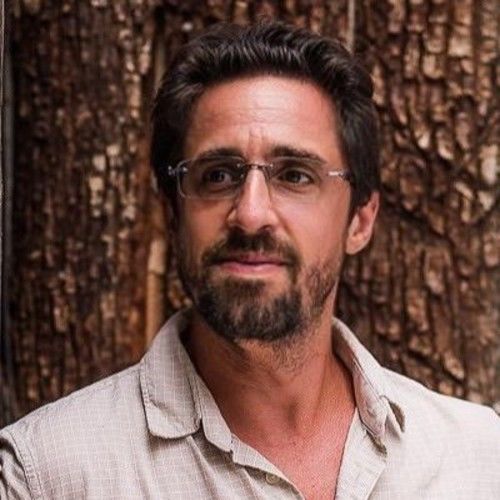
I have been working in film and TV since 2007. Through my consultancy firm Zannoni Media, I have been involved as consultant and representative for amongst others Fintage House. For Fintage I negotiate agreements for films and television series, and am involved in business development and relationship management specifically in the US, Latin America and Spain.
My focus is business & legal affairs, and business development and prospection. I have given presentations, workshops and seminars at universities across the globe and at events such as the yearly conference of the National Association of Latino Independent Producers in the US (NALIP), the Winston Baker Film Finance Conferences, the Rio Film Market, the Bogota Audiovisual Market (BAM), and at the LATC Program in Los Angeles. Born in the Netherlands and a Dutch-Italian citizen, I am fluent in English, Spanish, Dutch and Italian, and basic in German.
More Stage 32 blogs by David Zannoni:
The Importance of Sales Projections for Your Films
LIVE from Berlinale: Film Markets vs. Film Festivals - Distributing Your Film Worldwide
The Latin American Film Market: A Complete Guide for Filmmakers & Producers
The State of the Entertainment Industry During COVID-19
Everything You Need to Know About Independent Film Distribution
Everything You Need to Know About International Co-Productions
How International Co-Productions Work
Everything You Need to Know About Residuals & Unions
The Italian and Spanish Film Industry: A Filmmakers Guide
Collection Account Management for Film & TV Producers
2020 Entertainment Business Overview and What to Expect in 2021
How to Protect the Financier's Position on Independent Film Projects
How to Manage Revenue Sharing on Independent Television Productions
How To Put Together a Recoupment Schedule for Audiovisual Projects
Collection Account Management for Animation
How to Protect the Financier's Position on Independent Film Projects
Navigating Business and Legal Affairs for Independent Film Projects
Let's hear your thoughts in the comments below!
Got an idea for a post? Or have you collaborated with Stage 32 members to create a project? We'd love to hear about it. Email Taylor at taylor@stage32.com and let's get your post published!
Please help support your fellow Stage 32ers by sharing this on social. Check out the social media buttons at the top to share on Instagram @stage32 Twitter @stage32 Facebook @stage32 and LinkedIn @stage-32
| Coffee & Content: Cinematography of EUPHORIA & 6 Filmmaking Tools for Under $20 |
| 5 Things Actors Can Do Everyday to Ensure Success |

Search Stage 32 Blog
There are now 4040 blog posts for you to enjoy. Search them all by tags below.
Acting, Advice, Cinematography, Coffee & Content, Composing, Contests, Distribution, Featured, Filmmaking, Financing, Inspirational, Networking, Producing, Screenwriting, Success Stories, Tips, Trending,Relevant Tags
Recommended Articles

Insider Intel: 2025- Your Year of Breakthroughs (+ What's Coming in 2026)

Green Lights and Grey Areas: Expanding Creative Collaboration in Publishing

Wearing Many Hats As A Creative

Insider Intel: Packaging your Project- The Chicken or the Egg Dilemma

How Stage 32 Script Services Make You A Better Writer

How to Get Help from Stage 32: Meet the Teams Behind the Scenes

Don't Let the Momentum of November Write Club Die: How to Stay Active Into 2026 & Beyond!

4 Reasons To Have Audio Description On Your Film

Making Our First No-Budget Feature: The Pure Vortex Production Chaos (Part 2)
Coffee & Content: Reinvent the Story, Reinvent the Industry
 Register / Log In
